
I've been watching advertisers shift budgets away from the usual suspects lately, and it's not subtle anymore. Somewhere between rising CPCs on Google and Meta's ever-changing compliance hurdles, a whole segment of smart sports betting advertisers found breathing room elsewhere. Not because they wanted to leave, but because the math stopped working.
If you're running sports betting ads and feeling the squeeze, you're not imagining it. The platforms that used to deliver consistent ROI are now expensive testing grounds where compliance flags come faster than approvals, and scale feels like a memory.
The Real Problem Isn't Traffic, It's Cost Per Acquisition
Here's what I keep hearing from advertisers in this space: traffic isn't the issue. Google and Meta still have reach. The problem is what you pay to convert that traffic into a depositing user. When your sports betting advertising campaigns are burning through daily budgets before lunch and your CPA is climbing every quarter, something has to give.
I spoke with someone running a mid-tier sportsbook last month. They were spending close to $40K monthly on Meta alone. Approval times stretched to days, creatives got rejected for reasons that changed week to week, and their effective CPA had doubled since early 2025. They didn't want to leave, they just couldn't justify the numbers anymore.
Why Advertisers Are Testing Outside the Duopoly
The shift isn't happening because of some new trend or flashy platform feature. It's happening because advertisers are doing the math and realizing there are best Google Ads alternatives that actually work for regulated verticals like betting.
What makes an alternative "better" isn't always about volume. Sometimes it's about three things: approval speed, cost efficiency, and actual human support when compliance questions come up. Online sports betting ads need all three to scale without constant firefighting.
Specialized Networks Understand Betting Compliance
One pattern I've noticed: platforms built specifically for igaming advertising tend to have compliance teams that actually know the vertical. They're not running your sports betting advertisement through the same generic filter used for e-commerce or SaaS.
That means fewer surprise rejections, clearer feedback when something does get flagged, and faster turnaround when you need to launch a time-sensitive sports betting campaign around a major event. If you've ever had a Super Bowl promo stuck in review hell on Meta, you know exactly why this matters.
Lower CPCs Don't Always Mean Lower Quality
There's this assumption that cheaper traffic equals junk traffic. I've seen that assumption cost advertisers real money. A betting advertising network with lower baseline CPCs isn't automatically sending you bot traffic or disengaged users.
What's actually happening: these platforms operate outside the bidding wars of Google and Meta. Fewer massive brands competing for the same inventory means your sports betting marketing dollar stretches further. The traffic quality comes down to targeting, creative relevance, and how well the platform vets its publishers, not the price per click.
What "Better" Actually Looks Like in Practice
Let me give you a real scenario. You're running a sports betting promotion for March Madness. You've got geo-specific offers, tight margins, and a small window to capture attention. On Google, your ads go into review. Two days pass. One creative gets approved, three get flagged for "gambling-related policy concerns" even though your license is active in those states.
On a specialized platform? Your account manager already knows your vertical. Your creatives clear compliance in hours, not days. You're live while competitors are still waiting for their second round of appeals. That speed advantage alone can be the difference between a profitable campaign and a missed opportunity.
High-Intent Traffic Without the Premium Tax
One of the best sports betting ads I've seen recently wasn't flashy. It was a simple offer, clear terms, targeted to users actively searching for "NFL betting lines." The advertiser wasn't on Google. They were using a niche ad network with publisher relationships in the sports content space.
The result? Lower CPC, higher click-through rate, and most importantly, better conversion rates because the traffic was contextually aligned. These weren't users scrolling past an ad on their feed. They were already in the mindset to bet. Context matters more than reach when your margins are tight.
The Role of Creative in Non-Traditional Channels
Here's something that doesn't get talked about enough: sports betting adverts that work on Meta don't always translate to alternative platforms. The user intent is different. The creative approach needs to adjust.
On Meta, you're interrupting someone's scroll. On a specialized sports ad network, you're reaching someone who's already consuming sports content, probably already thinking about betting. That shift in context means your messaging can be more direct, your offers more prominent, and your CTAs stronger without feeling intrusive.
I've seen advertisers simply port over their Meta creatives to a sports ad campaign on a niche platform and wonder why performance drops. The fix isn't complicated, it's just a matter of matching creative tone to the environment. Less brand storytelling, more direct value.
Budget Allocation That Actually Makes Sense
Nobody's saying abandon Google or Meta entirely. But the 80/20 budget split where 80% goes to the duopoly and 20% goes to "testing" other channels? That ratio is flipping for some of the sharper operators I know.
When you find ads for sports betting that deliver comparable or better results at half the CPA, the smart move is to feed that channel until it caps out. Some advertisers are now running 50/50 splits, or even leaning heavier into alternatives during peak seasons when Google and Meta costs spike hardest.
Testing Without Burning Budget
If you're considering a move, start small. Take 10-15% of your monthly budget and run a structured test on a platform designed for advertise sports betting offers. Track not just CPC, but full-funnel metrics: registration rate, first deposit rate, and ultimately, CPA.
Give it at least 30 days and a few thousand clicks before making a call. The early data might look weird because your targeting assumptions from Google won't map one-to-one. But if the fundamentals are there, lower cost, decent engagement, clean traffic, then you've got something worth scaling.
Why This Shift Is Likely Permanent
I don't think this is a temporary arbitrage opportunity. The regulatory environment around sports betting is tightening, not loosening. Google and Meta are responding by adding more compliance layers, which means more friction for advertisers. That's not changing.
At the same time, purpose-built ad networks are maturing. They're adding better targeting, improving reporting, and building relationships with quality publishers who understand the vertical. The gap in sophistication is closing, while the gap in cost efficiency remains wide.
What You Should Do Next
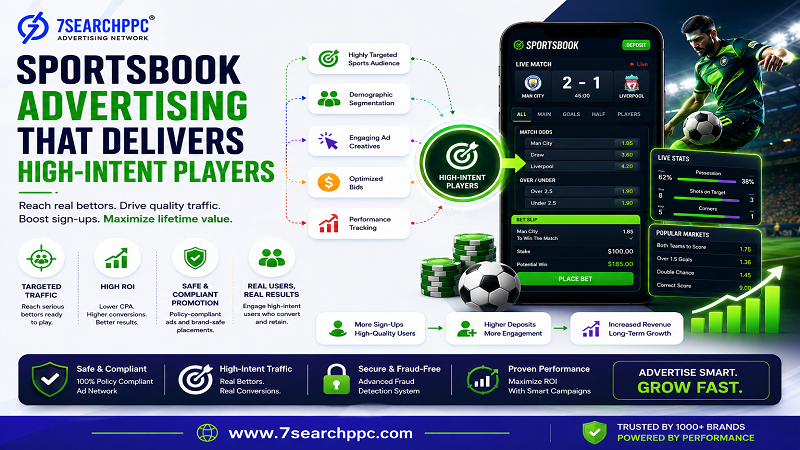
If you're curious whether there's a better way to run your sports betting ads, the easiest step is to actually test it. Not as a side experiment you check once a month, but as a real channel with proper tracking and budget allocation.
Most specialized platforms will work with you on compliance upfront, help you understand their targeting options, and give you a realistic picture of what to expect. If you're tired of rising costs and shrinking margins on the platforms everyone else is using, register with a betting advertising network and see what different looks like.
Final Thoughts
The advertisers winning in 2026 aren't necessarily the ones with the biggest budgets. They're the ones willing to follow the math instead of the crowd. If your current channels are delivering, great. But if you're squeezing ROI out of campaigns that used to run themselves, maybe it's time to look at where the smart money is actually moving.
Because the platforms beating Google and Meta right now aren't doing it with tricks or gimmicks. They're just offering something simpler: better economics, faster approvals, and support teams that know what a parlay is.
Frequently Asked Questions (FAQs)
Why are sports betting ads more expensive on Google and Meta now?
Ans. Competition has intensified as more states legalize sports betting, driving up CPCs. Additionally, both platforms have added stricter compliance requirements, increasing approval times and rejection rates, which indirectly raises effective costs.
What makes a specialized betting ad network different from Google Ads?
Ans. Specialized networks focus exclusively on gambling and betting verticals, so their compliance teams understand the regulations better. They also tend to have lower baseline CPCs due to less competition from non-betting advertisers.
Can I still get quality traffic outside of Google and Meta?
Ans. Absolutely. Quality depends on targeting and publisher vetting, not just platform size. Many niche networks partner with sports content sites where users are already in a betting mindset, leading to higher intent and better conversion rates.
How long should I test an alternative platform before deciding if it works?
Ans. Give it at least 30 days and several thousand clicks. Track full-funnel metrics like registration and deposit rates, not just CPC. Early performance might differ from what you see on Google or Meta as you optimize targeting.
Should I move all my budget away from Google and Meta?
Ans. Not necessarily. Many advertisers are running hybrid strategies, allocating 40-60% to alternative platforms while keeping presence on Google and Meta. Test first, then shift budget based on actual CPA and ROI data.














Write a comment ...